
12 Efficient Kayak Storage Ideas | Outdoor & Garage
Kayaks take up a lot of room, and finding a good place to keep one isn’t always easy. The goal is to store it somewhere that keeps it out of the way without putting too much pressure on the hull or leaving it exposed to sun and weather for months at a time.
Poor support can eventually lead to dents or flat spots in the hull, while long-term UV exposure can fade and weaken some kayak materials. Luckily, you have plenty of storage options whether you’re working with a garage, shed, backyard, or a small amount of wall or ceiling space.
Before choosing a setup, think about your kayak’s size, how much room you have, and how often you use it. If you paddle regularly, easy access probably matters most. If your kayak spends long stretches in storage, protection from the weather and good hull support may be more important.
Getting Your Kayak Up and Out of the Way
The best kayak storage setup really depends on the space you have, the type of kayak you own, and how often you want to get it in and out. Some options make good use of empty wall or ceiling space, while others are better for heavier kayaks you’d rather not lift very far.
1. Wall-Mounted Kayak Racks
Wall-mounted racks are one of the easiest ways to get a kayak off the floor without making it hard to reach. J-style racks hold the kayak on its side, while cradle-style racks use padded arms to support more of the hull.
They can work well in a garage or shed as long as you have enough open wall space. Just make sure the rack is anchored into studs, masonry, or another solid surface and has wide, padded contact points to support the kayak.
2. Vertical Wall Storage
If you don’t have enough wall space to store a kayak horizontally, standing it vertically can save quite a bit of room. This can work especially well in the corner of a garage or shed.
Use some padding underneath the bow or stern and secure the kayak so it can’t tip over. With a heavier fishing kayak, though, horizontal storage may be easier on both you and the boat.
3. Ceiling Hoist Systems
If your walls and floor are already full, look up. A ceiling hoist lets you use space that would otherwise sit empty and can be a great option in a garage.
Pulley systems make it easier to raise and lower the kayak, but the setup still needs to be securely attached to ceiling joists or rafters. Use wide straps around the hull rather than hanging the kayak from its grab handles or scupper holes.
Before installing one, make sure you have enough ceiling height for the kayak and whatever still needs to fit underneath it.
4. Overhead Strap Storage
You don’t necessarily need a full pulley system to store a kayak overhead. Wide suspension straps can be a simpler option, especially if you don’t need to take the kayak down very often.
Position the straps so the kayak is supported evenly and avoid cinching them tightly around the hull. This setup can work especially well for seasonal storage.
5. Freestanding Multi-Kayak Racks
If you have more than one kayak, a freestanding rack can keep everything together without drilling into your walls or ceiling.
Look for a sturdy base, padded supports, and materials that make sense for where you’ll keep it. If the rack will be outdoors, choose something that can handle rain and moisture.
Also think about how high you actually want to lift your kayaks. A four-kayak rack may save space, but putting a heavy fishing kayak on the top level may get old pretty quickly.
6. Portable Kayak Stands
Portable stands are about as simple as kayak storage gets. They usually come as a pair and keep the kayak elevated without requiring any permanent installation.
They’re useful in garages, sheds, workshops, or even outside while you’re cleaning or working on the kayak. Look for wide, padded supports and space the stands far enough apart to support the hull evenly.
7. Low Floor Cradles
If you have the floor space, a low cradle can be one of the easiest options to live with. The kayak stays close to the ground, so you don’t have to lift it very far.
That can be especially helpful with heavier fishing kayaks. The downside, of course, is that it takes up more floor space. Keep the kayak elevated rather than resting directly on concrete or the ground.
8. Under-Deck or Eave Storage
Outdoor storage doesn’t have to mean leaving your kayak completely exposed. The space under a deck, roof overhang, or deep eave can give you some built-in protection from the sun and weather.
Add wall brackets, straps, or a freestanding rack to keep the kayak off the ground and properly supported. Just leave enough airflow around it so moisture doesn’t stay trapped against the hull.
This can be a great option if the garage is full but you have covered outdoor space that isn’t doing much else.
9. Covered Outdoor Kayak Racks
If indoor storage isn’t an option, a dedicated outdoor rack can work well too. Choose a shaded area when possible and keep the kayak elevated so it isn’t sitting in dirt, grass, or standing water.
A roof, awning, fitted cover, or tarp can add more protection. If you use a tarp, suspend it over the kayak rather than wrapping it tightly around the hull so air can still circulate.
And if the kayak is easy to see or access, consider adding a cable lock or another way to secure it.
10. Dockside Kayak Storage
If you keep your kayak at the lake, storing it near the dock can save you from hauling it back and forth every time you want to paddle.
Dock-mounted or wall-mounted racks can keep the kayak off the walking surface while still making it easy to grab. Use hardware made for outdoor conditions, protect the kayak from long-term sun exposure when you can, and add a lock if security is a concern.
For Manta Racks owners, our dock and wall mounts let you use compatible S1, S2, and L2K rack systems on a dock, garage, or wall when they’re not being used on the boat.
11. Shed Storage
A shed can give you a lot of the same protection as a garage without taking up garage space. Depending on the size, you can use wall racks, a freestanding rack, vertical storage, or overhead straps inside.
Measure the kayak and the doorway before deciding on a setup. A 12-foot kayak isn’t much good in the shed if getting it through the door turns into a project every time.
12. DIY Kayak Storage
You don’t have to buy a dedicated rack. A basic DIY setup can work just as well if you’re trying to save money or need something built around your particular space.
A few easy options include:
- PVC racks: Lightweight, affordable, and easy to customize. Add foam or padding anywhere the rack touches the hull.
- Wooden racks: A good option for building a sturdy rack for one or several kayaks.
- Modified sawhorses: Add wider top boards and padding for a simple horizontal storage setup.
- Pool noodle padding: An inexpensive way to add cushioning to racks, sawhorses, or other support points.
If you build your own rack, check it every so often, especially if it stays outdoors. Make sure the hardware is still secure, the padding hasn’t shifted, and the kayak is still supported evenly.
Seasonal vs. Year-Round Kayak Storage
A kayak you’re using every weekend doesn’t need the same storage routine as one that’s being put away until spring. During the active season, you want a setup that protects the hull but still makes it easy to grab the kayak and go. For longer stretches of storage, the focus shifts more toward moisture, temperature, and avoiding pressure on the hull over time.
Storing Your Kayak for the Winter
Before storing your kayak for the winter, give it a good wash with mild soap and water to remove salt, mud, and debris, then let it dry completely inside and out. Moisture left behind for months can lead to mold or mildew by the time you pull it back out in the spring.
Remove anything that doesn’t need to stay with the kayak, including seat cushions, electronics, paddle holders, and other accessories that could be damaged by cold or moisture. A cool, dry storage area is ideal, especially one away from furnaces, space heaters, or other direct heat sources.
If straps are holding the kayak in place, keep them secure but not overly tight. Long-term pressure in one area can eventually leave marks or contribute to hull deformation.
Keeping Your Kayak Ready During Paddling Season
During paddling season, convenience matters a lot more. Wall racks, freestanding racks, and other easy-access systems make it much simpler to get the kayak in and out without turning every trip into a lifting project.
Even if the kayak is only sitting for a few days between outings, it should still be supported evenly and kept out of prolonged direct sunlight when possible. For outdoor storage, a cockpit cover can help keep out rain, leaves, bugs, and other debris. Just leave enough airflow for moisture to escape so the kayak stays protected and ready for the next trip.
How Long Will Your Kayak Be in Storage?
How long your kayak will be sitting makes a difference too. A kayak you use every weekend doesn’t need the same setup as one that’s going into storage for the whole winter.
The longer it sits, the more important it becomes to protect the hull, keep moisture under control, and limit long-term sun exposure.
- A few days to a few weeks: A padded rack or cradle is usually plenty. Just make sure the kayak is dry and supported evenly between trips.
- A few months: Give it a good cleaning, keep it out of prolonged sun, and use a breathable cover if needed. Check that straps or supports aren’t pressing too hard on the hull.
- Long-term or winter storage: Give the kayak a little more protection. Keep it indoors or covered when possible, avoid narrow pressure points, and check it every so often for warping, fading, cracking, or trapped moisture.
If you paddle often, easy access may matter most. If the kayak won’t come back out until next season, it’s worth spending a little more time making sure the storage setup will protect it while it sits.
Make Manta Racks Your Kayak Storage Solution
Our Manta Racks can make both carrying and storing your kayak easier.
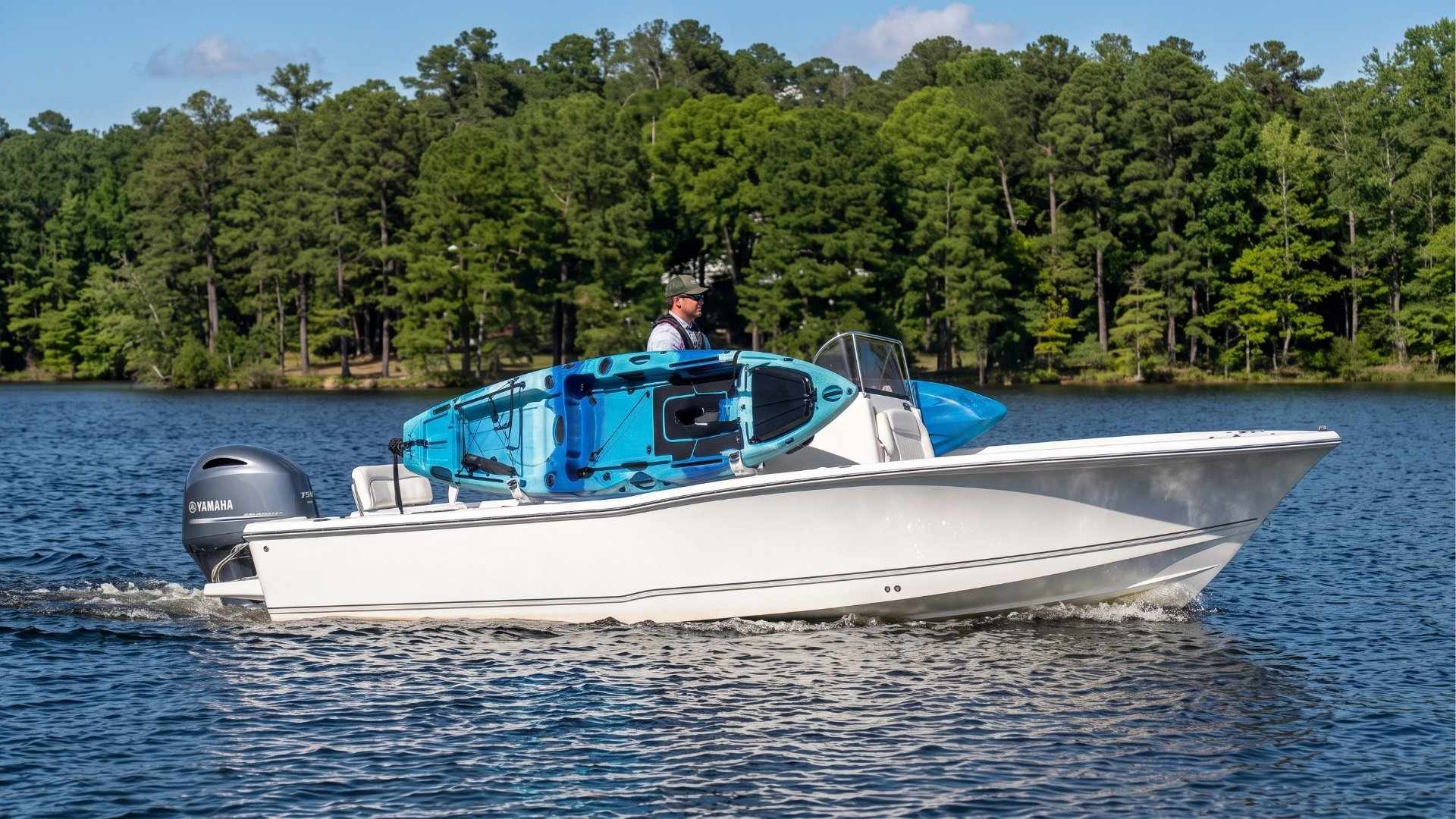
The Manta Racks L2K is designed to carry one kayak alongside your boat using reinforced fishing rod holders. It keeps the kayak secure and off the deck while you’re on the water.
When you’re done for the day, our dock and wall mounts give that same L2K rack a place to go. Remove the rack from your boat and place it into the mounts to store your kayak up off the ground on a dock, garage, or wall.
That way, you don’t need one rack for the boat and a completely separate setup for storage. With the dock and wall mounts, your L2K can do both. Did you enjoy this post? You’ll probably like this one too: From the Lake to the Sea: A Guide to the Most Popular Types of Kayaks


